

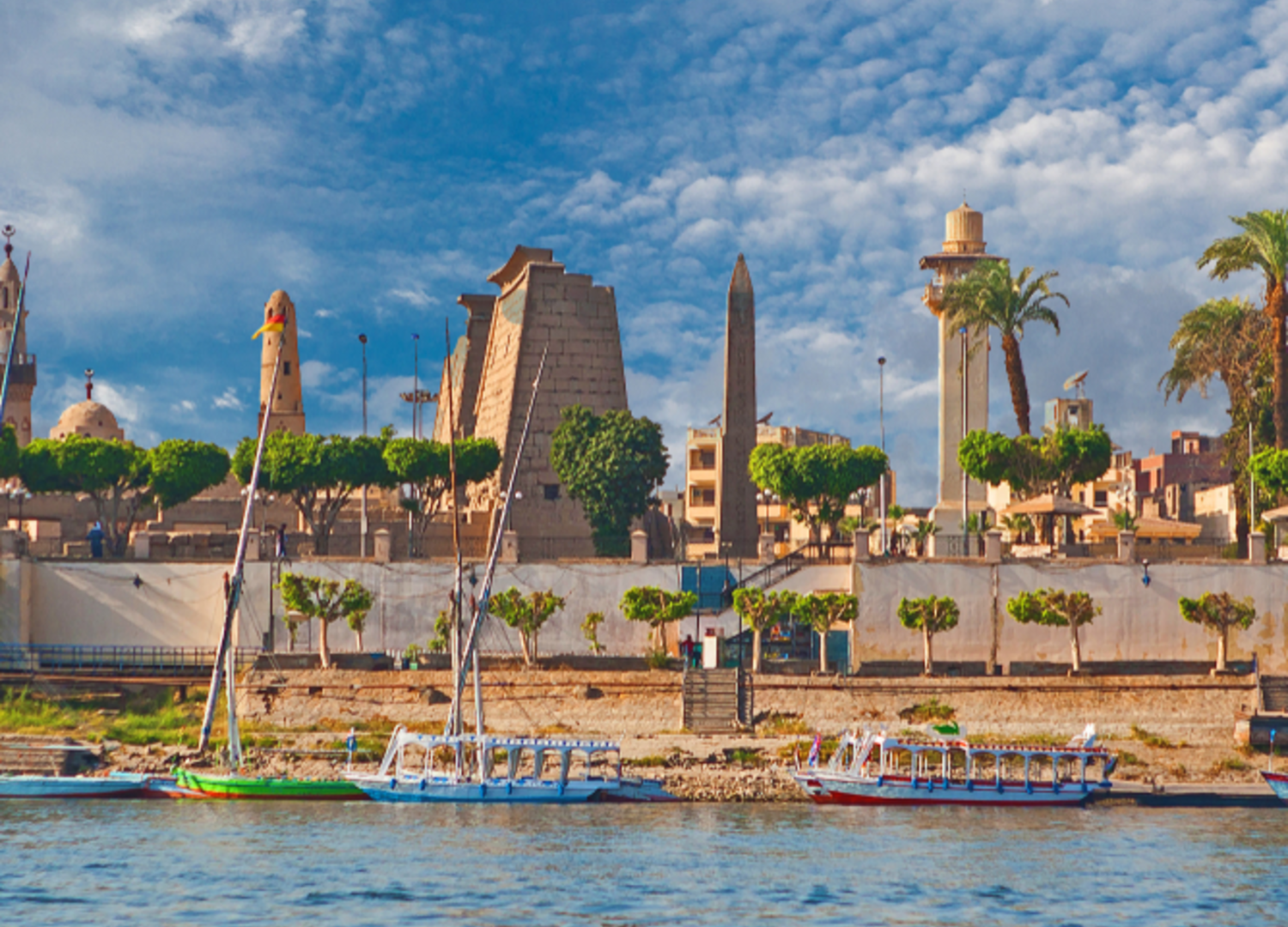
The World’s Greatest Open-Air Museum
Luxor, built on the site of ancient Thebes, was the capital of Egypt during the New Kingdom (1550–1070 BC). No city on earth can match its concentration of monuments — temples, tombs, and colossi line both banks of the Nile in breathtaking abundance.
East Bank Highlights
- Karnak Temple Complex — The largest religious building ever constructed. Its Hypostyle Hall, with 134 massive columns, is one of the most impressive sights in all of Egypt.
- Luxor Temple — Beautifully illuminated at night, this temple sits in the heart of modern Luxor and was dedicated to the rejuvenation of kingship.
- Luxor Museum — A carefully curated collection of artifacts from the Theban area, including stunning statues and royal mummies.
West Bank Highlights
- Valley of the Kings — Final resting place of pharaohs including Tutankhamun, Ramesses II, and Seti I. Over 60 tombs have been discovered here.
- Temple of Hatshepsut — A striking terraced temple built into the limestone cliffs at Deir el-Bahari, honoring Egypt’s most famous female pharaoh.
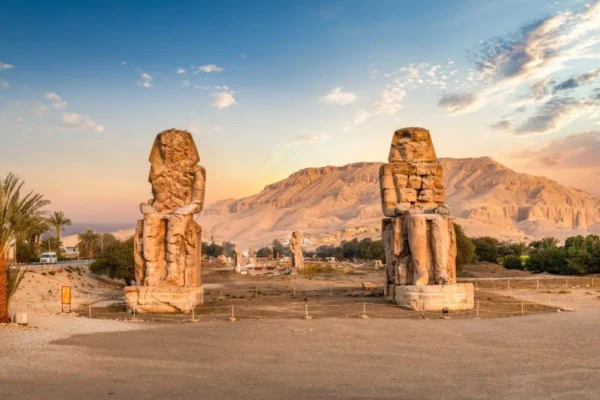
- Colossi of Memnon — Two massive stone statues of Pharaoh Amenhotep III that have guarded the Theban necropolis for 3,400 years.
- Medinet Habu — The mortuary temple of Ramesses III, with some of the best-preserved reliefs and colors in all of Egypt.
Hot Air Balloons
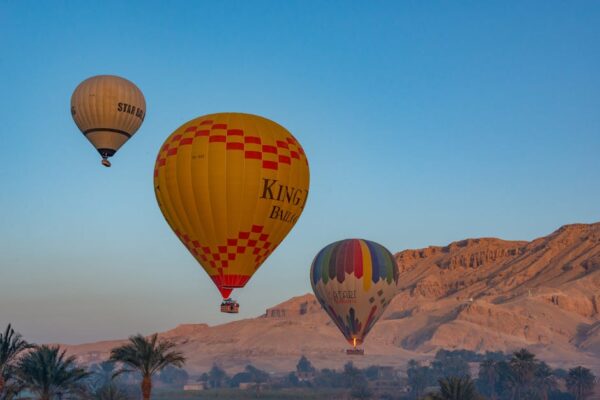
A sunrise hot air balloon ride over the West Bank is one of the most magical experiences in Egypt, offering bird’s-eye views of the temples, tombs, and farmland along the Nile.